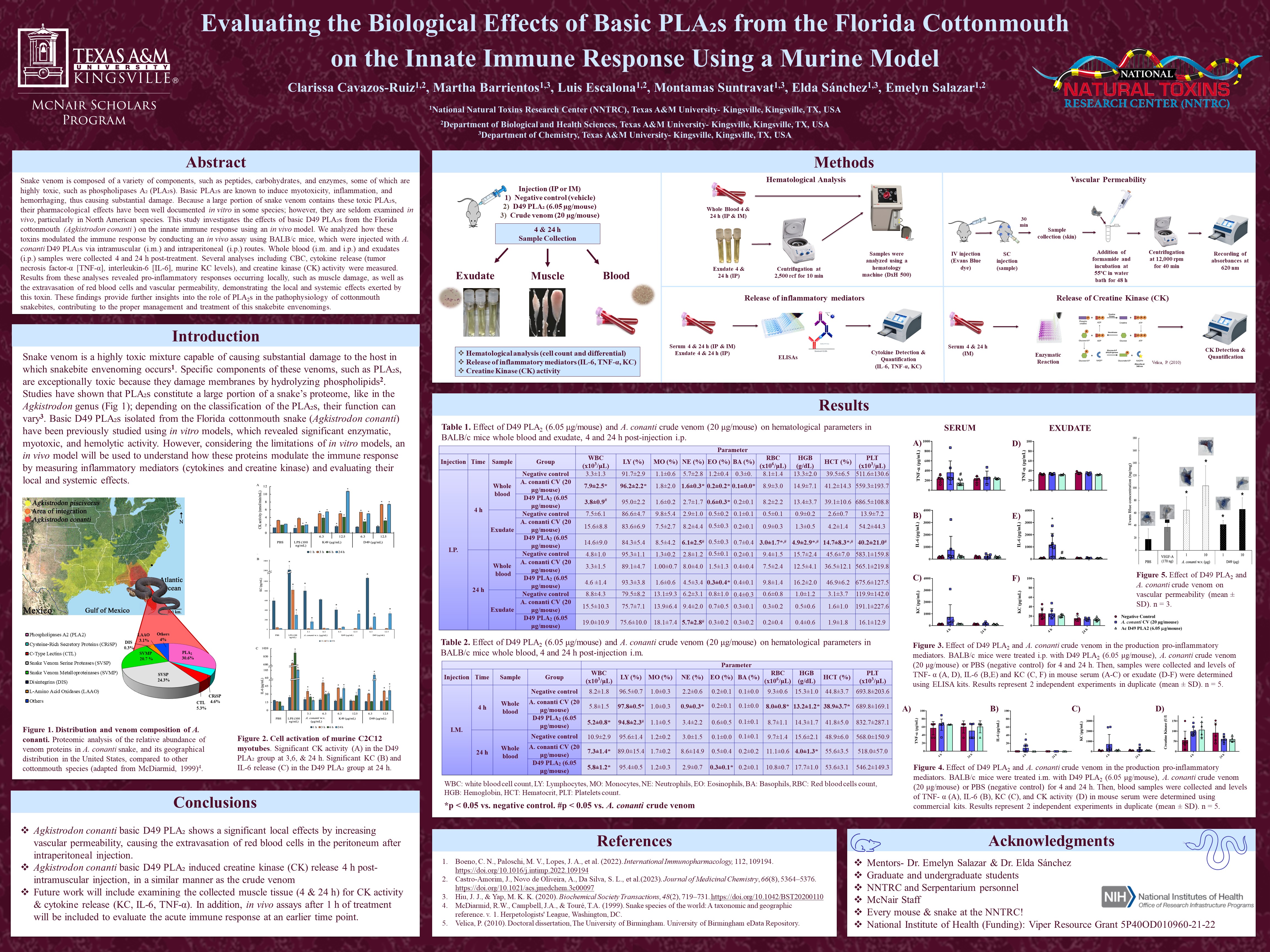
Snake venom is composed of a variety of components, such as peptides, carbohydrates, and enzymes, some of which are highly toxic, such as phospholipases A₂ (PLA₂s). Basic PLA₂s are known to induce myotoxicity, inflammation, and hemorrhaging, thus causing substantial damage. Because a large portion of snake venom contains these toxic PLA₂s, their pharmacological effects have been well documented in vitro in some species; however, they are seldom examined in vivo, particularly in North American species. This study investigated the effects of basic D49 PLA₂s from the Florida cottonmouth (Agkistrodon conanti) on the innate immune response using an in vivo model. We analyzed how these toxins modulated the immune response by conducting an in vivo assay using BALB/c mice, which were injected with A. conanti D49 PLA₂s via intramuscular (i.m.) and intraperitoneal (i.p.) routes. Whole blood (i.m. and i.p.) and exudates (i.p.) samples were collected 4 and 24 h post-treatment. Several analyses, including complete blood count (CBC) parameters, cytokine release (tumor necrosis factor-α [TNF-α], interleukin-6 [IL-6], murine KC levels), and creatine kinase (CK) activity, were measured. Results from these analyses revealed pro-inflammatory responses, including muscle damage, red blood cell extravasation, and increased vascular permeability, demonstrating the local and systemic effects exerted by this toxin. These findings provide further insights into the role of PLA2s in the pathophysiology of cottonmouth snakebites, contributing to the proper management and treatment of this snakebite envenomings.
Keywords: Agkistrodon, cottonmouth venom, PLA2s, murine model, immune response
Faculty Mentors: Dr. Emelyn Salazar Castillo & Dr. Elda Sanchez
School of Biology and Biomedical Sciences, National Natural Toxins Research Center & School of Mathematics and Physical Sciences