In recent years, a limited body of research has emerged highlighting the potential for elementary school music programs to contribute to the social emotional learning (SEL) of children. Due to various factors, however, some school districts throughout the Coastal Bend region of Texas have begun eliminating elementary music instruction from schools. Contributing factors include reductions in funding due to declining enrollment, the closing and consolidation of schools, pressure on academic performance, and state-designed curricula. Because of reduced musical instruction in some Coastal Bend schools, this prompted the need to better understand the role of music education in the social emotional development of elementary students within the region.
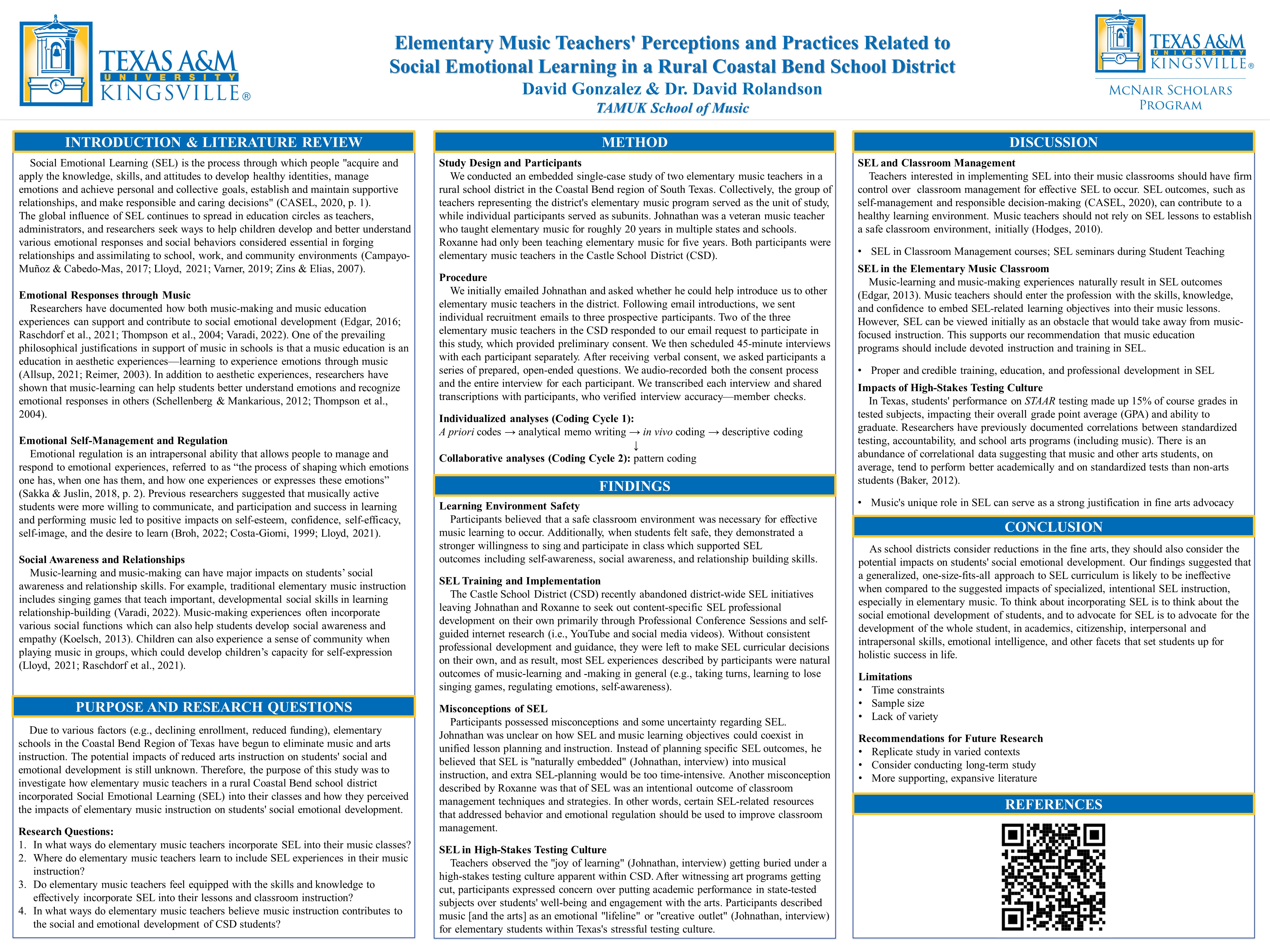
We conducted an embedded single-case study of elementary music teachers in a rural school district in the Coastal Bend region of South Texas to investigate how teachers incorporated SEL experiences into their classes and how they perceived the impact of music learning experiences on students’ social emotional development. Four primary themes emerged from the data including: Learning environment safety, SEL training and implementation, SEL misconceptions, and SEL experiences in a high-stakes testing culture. These findings suggested music education played an important and unique role in the social and emotional development of many students that cannot be easily replicated or replaced, especially within core subjects.
The pressure to perform on high-stakes tests often leads to schools prioritizing instruction in tested subjects over the arts. As a result, students often experience reductions in musical instruction, which can have wide-ranging effects including impacts on their social and emotional development. Implications on the field of music education are discussed.
Faculty Mentor: Dr. David Rolandson
TAMUK School of Music