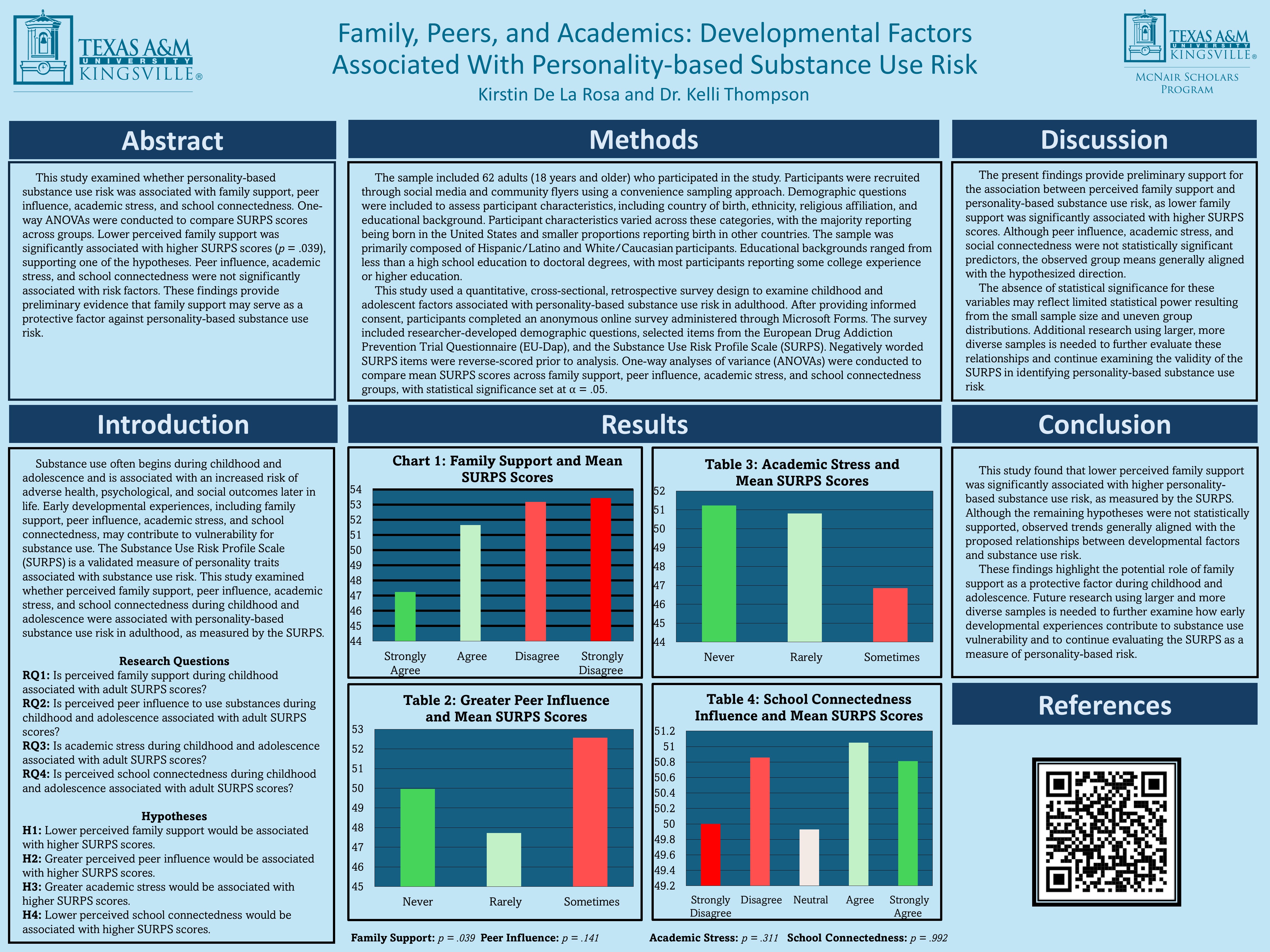
The present study examined whether personality-based substance use risk, measured by the Substance Use Risk Profile Scale (SURPS), differed across levels of developmental risk factors, including family support, peer influence, academic stress, and school connectedness. Sixty-two adults completed an anonymous retrospective online survey assessing childhood and adolescent experiences, personality characteristics related to substance use risk, and demographic information. The survey included the Substance Use Risk Profile Scale (SURPS; Woicik et al., 2009), adapted items from the European Drug Addiction Prevention Trial Questionnaire (EU-Dap; Ramírez et al., 2021), and researcher-developed questions. One-way analyses of variance (ANOVAs) were conducted to compare mean SURPS scores across groups based on family support, peer influence, academic stress, and school connectedness. Participants reporting lower levels of perceived family support demonstrated significantly higher SURPS scores. Differences in SURPS scores across peer influence, academic stress, and school connectedness groups were not statistically significant. These findings suggest that perceived family support may be an important developmental factor related to personality-based substance use vulnerability and highlight the need for further research using larger and more diverse samples.
Keywords: Substance Use Risk Profile Scale (SURPS), substance use, family environment, peer influence, academic experiences, school connectedness
Faculty Mentor: Dr. Kelli Thompson
Department of Social and Behavioral Sciences